
How to Find the Right Therapist in Bangladesh: A Step-by-Step Guide
Finding the right therapist is one of the most important decisions in a mental health journey – and often one of the most confusing. In Bangladesh, the mental health profession is growing but still developing its regulatory framework, which means quality varies and it can be hard to know what to look for.
Outside the capital, we also list a psychologist in Sylhet and other cities, plus online sessions nationwide.
This guide explains exactly how to find a qualified therapist in Bangladesh, what credentials to verify, what questions to ask, and what warning signs to watch for.
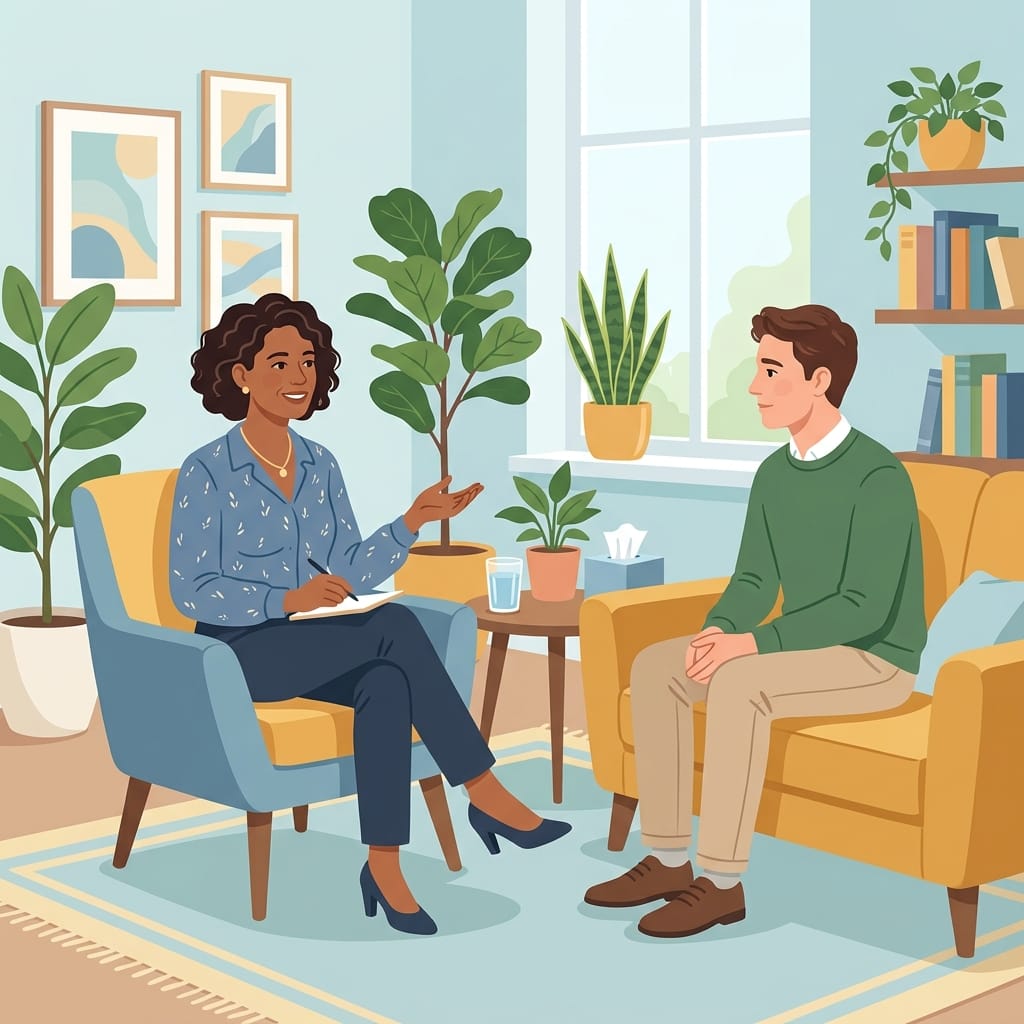
How do you choose the right therapist?
To choose the right therapist, first get clear on what you want help with. Check that they are properly qualified (an MS or M.Phil in clinical or counselling psychology), decide between online and in-person sessions, confirm the fees and confidentiality upfront, and notice how you feel in the first session. The right therapist feels safe, respectful and easy to talk to.
Step 1: Clarify What You Are Looking For
Different mental health professionals serve different needs. Before searching, be clear about what you need:
- Individual therapy – for personal emotional struggles, anxiety, depression, stress, trauma, grief
- Couples or marriage therapy – for relationship problems between two partners
- Family therapy – for family-wide conflict or dynamics affecting multiple members
- Child or adolescent therapy – for children or teens struggling emotionally or behaviourally
- Psychiatric assessment – if you think you may need a formal diagnosis or medication
For therapy (talk-based treatment), you want a clinical or counselling psychologist. For medication, you need a psychiatrist. Many people benefit from both.
Step 2: Understand Who Qualifies as a Therapist in Bangladesh
In Bangladesh, mental health care is provided by several types of professionals – and the title “therapist” or “counsellor” is not yet legally protected, which means anyone can use it. This makes credential verification essential.
Qualified professionals to look for:
- Clinical Psychologist – M.Phil or PhD in Clinical Psychology from a recognised institution (Dhaka University, BSMMU, or an accredited international university). The highest standard for psychological therapy.
- Counselling Psychologist – Masters-level training in psychological counselling. Qualified for most presentations including anxiety, depression, relationship issues, and stress.
- Psychiatrist (MBBS + MD/DPM) – Medical doctor specialising in mental health. Can diagnose and prescribe. Typically more appropriate for severe or complex psychiatric presentations.
Questions to verify before booking:
- What is your academic qualification and from which institution?
- How many years have you been in clinical practice?
- Do you have experience with [your specific issue]?
- What therapeutic approach do you use?
- Do you undertake regular supervision or continuing professional development?
A qualified professional will answer these questions clearly. Vague or defensive responses to questions about credentials are a warning sign.
Step 3: Decide Between Online and In-Person Therapy
Both formats are widely available in Bangladesh and both are effective. The right choice depends on your situation:
In-person therapy is often better when:
- You want a completely neutral space away from home
- You are working through complex trauma that benefits from physical presence
- You struggle to maintain focus or privacy in your home environment
Online therapy works well when:
- You live outside Dhaka and want access to qualified specialists
- You are an NRB (Non-Resident Bangladeshi) maintaining mental health support from abroad
- Your schedule makes regular in-person appointments difficult
- You prefer to begin therapy from the privacy of your own space
Research consistently shows online therapy achieves comparable outcomes to in-person therapy for most common presentations. The quality of the therapist matters more than the format.
Step 4: The “Near Me” Problem in Bangladesh
Searching “therapist near me” works well in cities where therapy is widely available. In Bangladesh, proximity is less important than qualification – and the best-qualified therapists for your specific issue may not be in your immediate neighbourhood.
A highly qualified therapist accessible online from anywhere in Bangladesh is almost always a better choice than a less-qualified therapist who happens to be geographically close.
Focus on: credentials, experience with your specific issue, communication style, and availability – not proximity.
Step 5: What to Expect in the First Session
The first session is an intake and assessment. Your therapist will ask about your current difficulties, your history, and what you hope to achieve. There are no right or wrong answers.
You are also assessing the therapist. After the first session, ask yourself:
- Did I feel heard and respected?
- Was I able to speak honestly without feeling judged?
- Did the therapist explain their approach and answer my questions clearly?
- Do I feel this person could help me?
If the answer to these questions is mostly no after 2-3 sessions, it is legitimate to seek a different therapist. Fit matters as much as qualifications.
Step 6: Red Flags to Watch For
- Cannot clearly state their qualifications or institution
- Promises specific outcomes (“I will cure your anxiety in 5 sessions”)
- Shares information about other clients
- Blurs professional boundaries (excessive personal sharing, dual relationships)
- Dismisses your concerns or consistently takes one person’s side (in couples work)
- Pressures you to commit to long-term, prepaid packages before trust is established
Finding a Therapist on a Platform vs Direct Booking
Therapy platforms like Chum Wellness vet their therapists before listing them – verifying qualifications, training, and clinical experience. This removes much of the uncertainty from the search process.
Direct booking from individual therapist websites or referrals requires you to verify credentials yourself using the questions above.
How to Make the Most of Your Sessions
Once you have chosen a therapist, a few habits help: protect a private, quiet space for each session; be honest, including about what is hard to say; note what comes up between sessions; and give the process time, since meaningful change usually takes several sessions. Consistency matters more than intensity, showing up regularly is what turns conversations into progress.
Cost, Logistics, and Commitment
Before booking, it is reasonable to ask about fees, session length, cancellation policy, and how scheduling works. A trustworthy therapist is transparent about all of this. You are not committing to an open-ended plan by starting, many people begin with a single consultation and decide from there whether to continue.
Understanding Different Therapy Approaches
Therapists work in different ways. Some use cognitive behavioural therapy, which focuses on the links between thoughts, feelings, and behaviour. Others draw on approaches that explore deeper patterns, relationships, or past experiences. You do not need to master these labels, a good therapist explains their approach in plain language and adapts to what you need. What matters is that the method fits your goals and that you understand the direction of the work.
What Progress Actually Looks Like
Progress in therapy is rarely a straight line. Some sessions bring clear insight; others feel like slow, steady work. Signs of progress include sleeping better, reacting differently to old triggers, communicating more clearly, or simply feeling more in control. It helps to check in with your therapist about goals every few sessions, so you can both see how far you have come and adjust the focus where needed.
Trusting Yourself in the Process
Choosing a therapist, and then doing the work of therapy, asks you to trust your own judgement at every stage, about who feels right, about what to share, and about when something is or is not working. That trust is part of the healing. A good therapist supports it rather than overriding it, helping you become more confident in reading your own needs. As you go, you will likely find that the skills you build in choosing and engaging with therapy, honesty, reflection, self-advocacy, are the same skills that help you well beyond the sessions themselves.
Ready to Begin
Choosing an online therapist is the first real act of taking care of yourself, and it is one you can take today. Trust what you have learned here: prioritise qualifications and fit, ask the right questions, and remember that you are always free to adjust if something is not working. The first consultation is a low-risk way to test the waters and see how it feels to be heard by a professional. Most people find that the hardest part was simply deciding to start.
Take the next step. Browse our licensed psychologists in Bangladesh by specialty and fee, and find the right fit for you.
When you are ready, see how online counselling in Bangladesh works at Chum Wellness and book your session.
Frequently Asked Questions
- How do I know if a therapist in Bangladesh is qualified?
Ask directly: What is your degree, and from which institution? Clinical psychologists hold M.Phil or PhD in Clinical Psychology from a recognised university. If they cannot answer this question clearly, verify before proceeding.
- Should I see a psychologist or a psychiatrist?
If you want talk therapy, see a psychologist. If you think you may need a formal diagnosis or medication, see a psychiatrist. Many people benefit from both. A good psychologist will refer you to a psychiatrist if they think medication may help.
- How much does therapy cost in Bangladesh?
Private sessions typically range from ৳1,500 to ৳6,000+ per session depending on qualifications and experience. Online sessions are often slightly more accessible. Some platforms offer sliding-scale pricing for financial constraints.
- What if I try a therapist and it does not feel right?
Finding the right therapist sometimes takes more than one attempt. If after 2-3 sessions you do not feel heard or safe, it is entirely appropriate to try someone else. This is not a failure – fit is a real factor in therapeutic effectiveness.
Find a Verified Therapist in Bangladesh
Chum Wellness lists verified, qualified therapists for individual, couples, family, and child therapy – available in person in Dhaka and online across Bangladesh. Browse therapist profiles or book a session today.
This article is for informational purposes only and does not constitute medical or psychological advice. If you are experiencing a mental health crisis, please contact a qualified professional immediately.
Get the support you need from our licensed professionals today. Both online and in-person sessions are available.
Want to Learn More?
Understanding the clinical and emotional dimensions of depression is crucial for recovery. For globally recognized research and extensive reading on mood disorders, explore the comprehensive resources provided by the National Institute of Mental Health (NIMH) on Depression.
📊 Key Takeaways: Psychotherapy
- Evidence-Based: Therapies like CBT are globally recognized as highly effective for depression and anxiety.
- Root Causes: Therapy goes beyond symptom management to address the underlying causes of distress.
- Safe Space: A clinical psychologist provides complete confidentiality and non-judgmental professional support.
Explore more
Keep Reading
Talk to our psychologists
Book a confidential session with a licensed psychologist at Chum Wellness.
For relationship concerns, see couple and marriage counselling in Dhaka.
🔒 Your privacy is protected. Every session at Chum Wellness is strictly confidential and never shared without your written consent. Read our confidentiality policy.