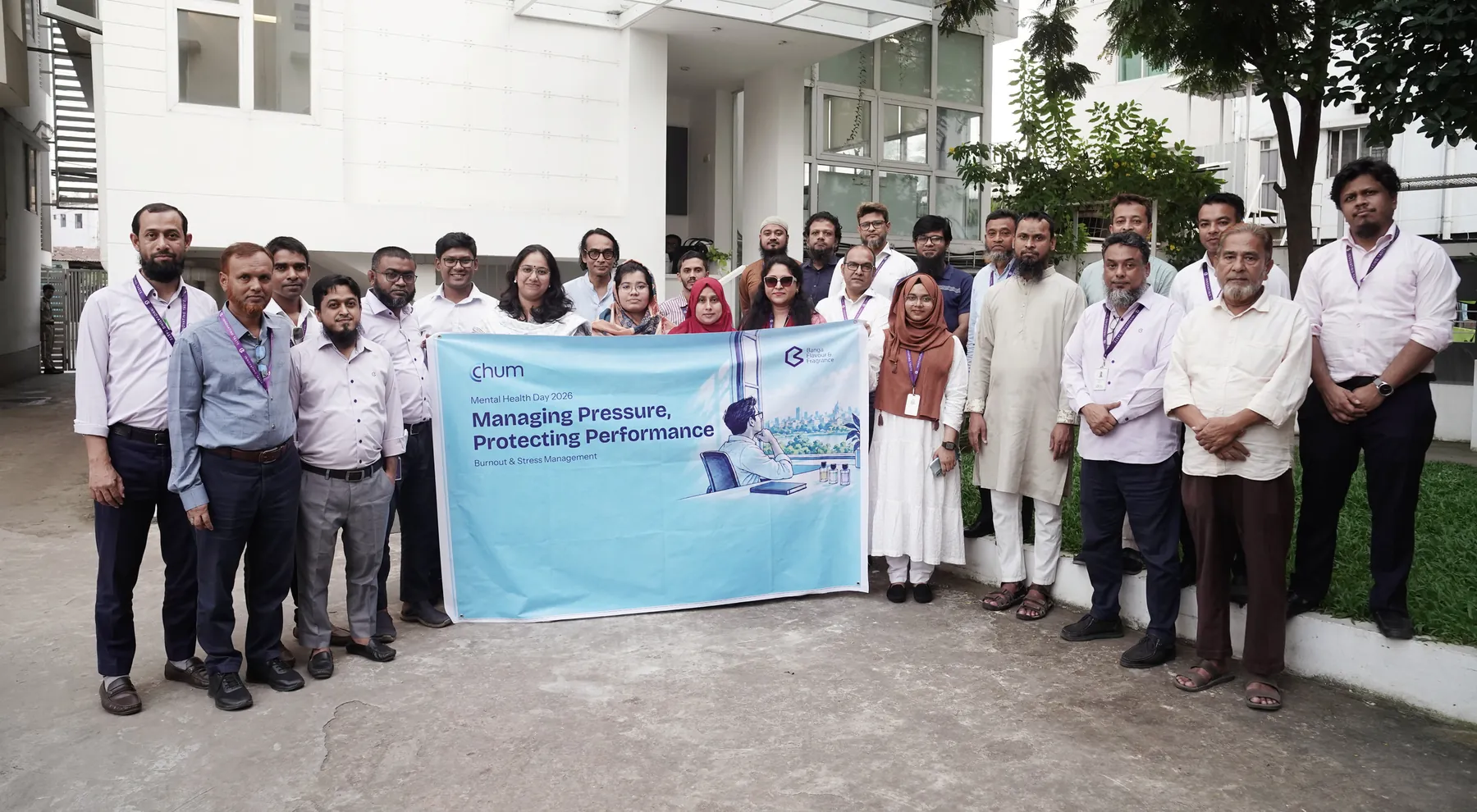
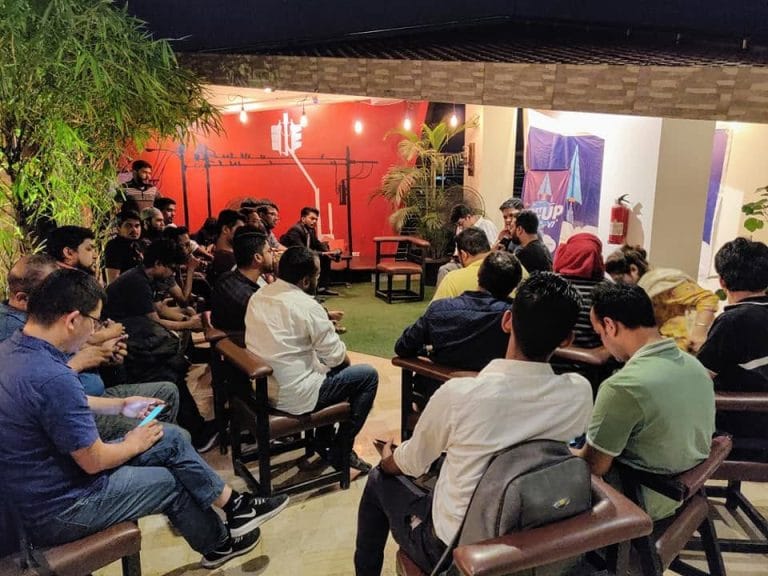
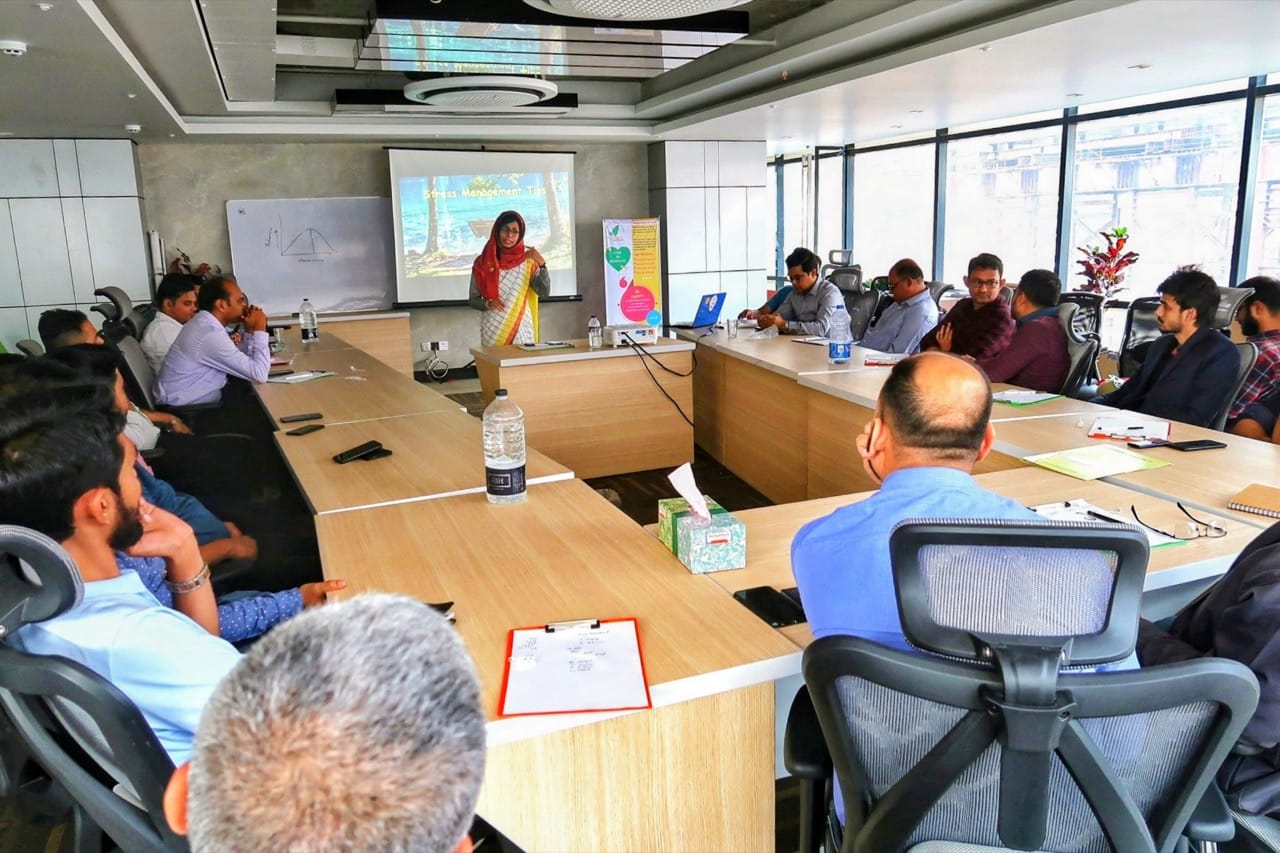
When a nation needed support, Pashe Achhi answered
Pashe Achhi (পাশে আছি, “we are by your side”) is Chum Wellness’s own community response born from the July–August 2024 mass uprising in Bangladesh. It is not a paying corporate client but a free initiative, and it shows the same principles that shape our corporate mental health programme for employers: reach people where distress is highest, deliver professional care with dignity, and treat mental strength as something a community can rebuild together. In the weeks after the uprising, many people across the country were left coping with stress, anxiety, depression, and panic, and a coordinated mental-health response was urgently needed.
What Chum Wellness delivered
Pashe Achhi was a joint initiative of Psycoach Bangladesh, Mental Health Professionals for Bangladesh (MHPB), and Chum Wellness, a coalition assembled for the moment. Together, a team of more than 35 psychologists volunteered to provide free mental-health care for two months from August 2024. The work was supervised by Saima Akhtar (Psycoach Bangladesh), Zohora Parveen (MHPB), and Rafiul Islam (Chum Wellness).
The goal was practical rather than clinical jargon: help affected people rebuild their mental strength, find workable coping strategies, and gradually return to everyday life with hope for the future. As MHPB convener Zohora Parveen put it, “It is very necessary to know some psychological strategies to carry on and gradually revive stalled life.”
Care built around real distress
The country was witnessing genuine socio-psychological strain, heightened stress, reduced tolerance, and widespread distress that cut across households, campuses, and workplaces. The volunteer psychologists focused on steadying people through that acute period, offering a safe space to talk and concrete tools to carry forward. For Chum Wellness, Pashe Achhi reflects what we stand for: making compassionate, professional mental-health support accessible when people need it most.
What crisis response teaches workplaces
National crises do not stay outside the office. The same anxiety, grief, and fatigue that Pashe Achhi met in the community walk into workplaces every day, affecting focus, attendance, and how colleagues treat one another. Workplace mental health in Bangladesh is still an emerging conversation, and employers who take it seriously build steadier, more resilient teams.
An Employee Assistance Programme (EAP) applies the same thinking inside a company: confidential access to trained psychologists, early support before problems escalate, and a culture that treats employee wellbeing as core to performance rather than an afterthought. Where Pashe Achhi mobilised volunteers for a two-month emergency, a structured programme gives your people year-round, dependable support. You can see how this translates into ongoing employer support through our EAP for organisations and read how we approach other engagements in our programme case studies.
From crisis response to lasting resilience
What Pashe Achhi proved at national scale, that professional, compassionate care delivered quickly changes how people cope, is exactly what a good corporate wellbeing partnership delivers quietly, every week. Whether your team is navigating a difficult period or you simply want to put proper mental-health foundations in place, the model is the same: qualified clinicians, honest support, and a plan matched to your people.
What a crisis response teaches about mental health support
During the July–August 2024 uprising, many people in Bangladesh faced fear, grief and uncertainty at the same time. In moments like that, the most important thing is reaching people early, with care that is professional and easy to access.
The same principles apply in any workplace after a difficult event: respond quickly, make support confidential and easy to reach, and have trained professionals ready. That is why critical-incident support is part of a good Employee Assistance Programme.
Signs your team may need support after a difficult event
- People struggling to concentrate after a crisis
- Fear, grief or anger showing up at work
- Colleagues withdrawing or seeming on edge
- Managers unsure how to support their teams
If several of these sound familiar, a short conversation with our team can help you decide where to start.
How to run a similar programme in your organisation
Every organisation is different, but most successful programmes follow the same simple path:
- Start with what your people need. Share your team size, locations, shift patterns and the pressures you are seeing.
- Choose the right format. A one-off corporate workshop, a year-round wellness programme, an Employee Assistance Programme, or a mix.
- Launch with a pilot if you like. Many companies start with one team and expand once people see the value.
- Review anonymised results. Participation, feedback and themes guide what comes next, without identifying anyone.
See all our corporate wellness and employee mental health services, or browse more corporate mental health case studies.
Frequently asked questions
What was Pashe Achhi?
Pashe Achhi (পাশে আছি, ‘we are by your side’) was Chum Wellness’s own free community response to the July–August 2024 uprising in Bangladesh.
Who supervised the work?
The work was supervised by Saima Akhtar (Psycoach Bangladesh), Zohora Parveen (MHPB) and Rafiul Islam (Chum Wellness).
Was Pashe Achhi a paid corporate programme?
No. It was a free community initiative. It is included here because it shows how Chum responds when distress is high.
Can companies get support after a difficult event?
Yes. Critical-incident support for teams is part of our Employee Assistance Programme and can be arranged quickly.
Bring the same care to your workplace
If Pashe Achhi speaks to the kind of support you want for your own employees, Chum Wellness can help you design it. Explore our full offering for employers on the Chum for Business hub, or Request a proposal to start building a mental-health programme that keeps your team steady, supported, and by each other’s side.