Homesickness and Loneliness for Bangladeshi Students Abroad
Nobody posts the 2 AM part. The scholarship photos went on Facebook, relatives called you the pride of the family, and then you landed in Toronto or Manchester or Melbourne and discovered what it costs: cooking alone, studying alone, eating alone, while everyone back home believes you are living the dream. If you are a Bangladeshi student abroad and loneliness has become your quiet roommate, this guide is for you.
Living outside Bangladesh? We work with Bangladeshis across the UK, Europe, North America, Australia and the Gulf, online, in Bangla or English, at the same fee as in Dhaka. See therapy for Bangladeshis abroad.
ভিডিওতে দেখুন:
Homesickness or something heavier?
Homesickness is normal and usually softens within weeks as routines form. What deserves attention is when it deepens instead:
- Weeks of low mood that do not lift, even after calls home
- Withdrawing from classmates; your only social life is a screen showing Dhaka
- Sleep flipped upside down beyond what timezone explains
- Appetite changes, no energy, classes slipping
- Anxiety spikes before every call home because you must perform “I am fine”
- Thoughts like “I am wasting my family’s money” or “I cannot fail, and I cannot continue”
That last cluster matters most. If hopeless thoughts appear, treat it as urgent and reach for professional support the same week. Read our guide on depression signs and treatment to understand what you are looking at.
Why it is heavier for Bangladeshi students
Generic campus articles talk about “adjustment”. They do not understand what sits on a Bangladeshi student’s shoulders: land may have been sold for your tuition, a father may have spent his retirement savings, younger siblings’ futures may be waiting on yours. In our clinicians’ experience, the loneliness itself is rarely what breaks students; it is loneliness multiplied by the weight of family sacrifice and the impossibility of admitting a struggle to the people who paid for the dream. You cannot tell ma you cried this week, because she will not sleep for a month. So you carry it silently, and silence is exactly what depression feeds on.
The first semester is the hardest, and that is predictable
Almost every international student hits a low point somewhere in the first three to six months: the novelty fades, the weather turns, the first hard exams arrive, and the gap between the imagined life and the real one is widest. Knowing this is normal helps. It usually eases as friendships form and competence grows. But “usually eases” is not “always”, and a low point that keeps deepening past that window is worth taking seriously rather than waiting out.
None of this is a character weakness or a sign you were not ready to go. The World Health Organization notes that half of all mental health conditions begin by age 14 and three-quarters by the mid-twenties, and that most go undetected and untreated. The student years are simply when this surfaces for a lot of people, and moving thousands of kilometres from every familiar support at the same time is a stress-test, not a personality flaw.
The academic-pressure spiral
Loneliness and grades feed each other viciously. You are isolated, so you cannot focus; you cannot focus, so grades slip; grades slip, so anxiety rises and shame grows; shame makes you withdraw further. Many students describe lying in bed for hours, exhausted but unable to study, then panicking at the wasted time. Breaking any single link, the isolation, the sleep, the catastrophic thinking, tends to loosen the whole spiral. That is precisely what therapy targets.
What actually helps, beyond “join a club”
- Build one real routine anchor: same library slot, same gym time, same weekly call. Loneliness feeds on shapeless days.
- Find your people gradually: one Bangladeshi Students Association event a month plus one non-deshi connection beats forcing constant socialising.
- Guard the sleep-study-scroll triangle: late-night doomscrolling feels like rest but repairs nothing; it quietly deepens the exhaustion. Our social media guide has practical fixes.
- Tell one true thing per call: you do not have to unload everything on your parents, but performing perfection 100 percent of the time is corrosive. Practice one honest sentence.
- Eat like a person: living on instant noodles and skipped meals is not a budget hack, it is fuel for low mood. Cooking one proper deshi meal a week is genuinely medicinal.
- Talk to a professional in your own language: campus counsellors are useful, but explaining Bangladeshi family stakes to someone who has never heard of BCS pressure or land-sold-for-tuition takes half the session. A Bangladeshi psychologist starts where you actually are.
Psychologists who work well with students abroad
The thing most students abroad actually want is not a specialist in migration. It is someone who speaks Bangla, understands what “the family is counting on me” means without a paragraph of explanation, and charges a fee that survives a student budget. All of these psychologists work online, and their fees are the same whether you are in Dhaka or Dortmund.
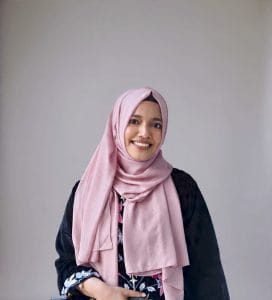
- Dilara Jahan, Clinical Psychologist, 5+ years. Depression and mood, anxiety and OCD. ৳2,000 online.
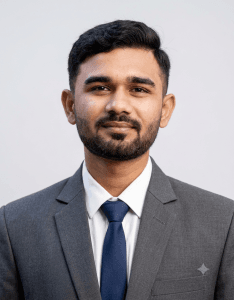
- Mihir Sarker, Assistant Clinical Psychologist, 4+ years. Depression, anxiety and OCD, trauma and grief. ৳2,000 online.
- Aakash Chakraborty, Counselling Psychologist, 4+ years. Anxiety and OCD, depression, trauma and grief, addiction. ৳2,000 online.
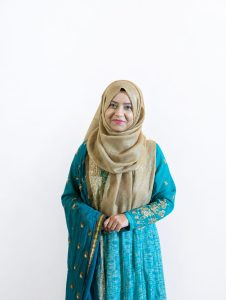
- Sirajum Monira, Clinical Psychologist, 10+ years. Depression, anxiety and OCD, children and teens. ৳2,200 online.
- Farah Tabassum Shamma, Assistant Clinical Psychologist, 7+ years. Anxiety and OCD, depression, trauma and grief. ৳2,500 online.
If what you are carrying is heavier than stress and low mood, if sleep and appetite have collapsed for a long stretch, or medication is worth discussing, we also have psychiatrists who consult online, including Dr. Srijony Ahmed (12+ years, ৳2,500). Compare everyone by specialty and fee, or book a session and tell us where you are and what your week looks like.
How the timezone actually works
This is the practical objection that stops people booking, so here are real numbers rather than reassurance. Bangladesh runs at UTC+6, and our psychologists work Bangladesh evenings, which lands conveniently in most student time zones:
- UK and Ireland: five to six hours behind Dhaka. A 9 PM Dhaka session is your late afternoon, after lectures.
- Germany, France, Italy, the Netherlands: four to five hours behind. Dhaka evening is your afternoon.
- Canada and the US east coast: ten to eleven hours behind. Our late evening is your late morning, which suits a gap between classes.
- Australia: four to six hours ahead. Our morning is your afternoon or early evening.
- Malaysia, Singapore, Japan and Korea: two to three hours ahead. Almost any slot works.
You do not have to calculate any of this. Tell us your city and the hours you are free, and we confirm the slot in your local time, in writing, so there is nothing to misread at 2 AM. Daylight saving shifts are handled on our side too, you will not lose a session because the clocks changed in March.
Therapy built to fit a student budget and timezone
This is exactly why Chum Wellness runs reduced-fee student support: our clinicians have long held that students, who seek help most willingly but afford it least, should never be priced out of care. Sessions run online worldwide, in Bangla or English, every day 9 AM to 9 PM Bangladesh time, which maps to mornings in North America and evenings in the UK and Australia, within reach of a student schedule. Standard sessions start from around 699 taka, student rates are lower, and payment can be handled by card or by family in Bangladesh via bKash. Completely confidential, including from your family. Browse the psychologists yourself, or let the team match you.
Start with the free 2-minute self-check if you are unsure, read how therapy from abroad works, or book a session now.
If it is an emergency where you are
One important limitation to be honest about: online therapy across a time difference is not emergency care. If you are having thoughts of harming yourself, or you do not feel safe right now, please use the help that is physically near you, tonight, rather than waiting for a session.
- Call your local emergency number, 999 in the UK, 911 in the US and Canada, 112 across the EU and Australia’s 000.
- Your university has a counselling service and an out-of-hours line, usually free and confidential, and using it does not affect your visa, your grades or your scholarship. This is the single most underused resource among Bangladeshi students abroad.
- Tell one person physically near you, a flatmate, a course mate, a warden. Not because they can fix it, but because being alone with it is the dangerous part.
If you are in Bangladesh rather than abroad, the national emergency number is 999.
Ongoing therapy with us works alongside that, not instead of it, and it is often what stops things reaching that point again.
Frequently asked questions
Is feeling lonely abroad normal or a mental health problem?
Early homesickness is normal. Loneliness that persists for weeks, pulls down sleep, appetite, study, or hope, has crossed into territory where support genuinely helps.
Can I afford therapy as a student?
Yes. Chum Wellness offers reduced student fees precisely for this situation. Mention your student status when booking.
Will my parents find out I am taking therapy?
No. Sessions are strictly confidential. Many Bangladeshi students abroad take sessions without telling family.
I am too busy with assignments to add one more thing. Is it worth it?
A single 50-minute session that lifts your focus and sleep usually returns far more than an hour. Untreated low mood costs you far more study time than therapy does.
What time zones work for students in Canada or Australia?
BD morning slots fit Australian evenings; BD evening slots fit North American mornings. The team confirms a slot that fits your class schedule.
বাংলায় কিছু কথা
বিদেশে পড়তে গিয়ে একা লাগছে? স্কলারশিপের ছবি সবাই দেখেছে, কিন্তু রাত দুইটার কষ্টটা কেউ দেখে না। রান্না একা, পড়া একা, খাওয়া একা, আর দেশে সবাই ভাবছে আপনি দারুণ আছেন। এই দূরত্বটাই সবচেয়ে ভারী।
চাম ওয়েলনেসের সাইকোলজিস্টরা অনলাইনে সেশন নেন, আর ফি দেশে যা, বিদেশেও তা, ২,০০০ টাকা থেকে শুরু। বাংলায় কথা বলতে পারবেন, তাই “পরিবার আমার ওপর ভরসা করে আছে” কথাটা বোঝাতে আলাদা করে ব্যাখ্যা করতে হবে না। আপনার শহরের সময় ধরে স্লট দেওয়া হয়, হিসাব আপনাকে করতে হবে না।
মন খারাপ, দুশ্চিন্তা, ঘুম উল্টে যাওয়া, পড়ায় মন না বসা, বাসায় ফোনে “ভালো আছি” বলার চাপ, যেকোনো কিছু নিয়েই কথা বলা যায়। বাসায় কেউ জানবে না, সেশনের কথা সম্পূর্ণ গোপন থাকে।
তবে যদি এই মুহূর্তে নিজের ক্ষতি করার চিন্তা আসে, তাহলে অপেক্ষা করবেন না। যেখানে আছেন সেখানকার জরুরি নম্বরে কল করুন, আর বিশ্ববিদ্যালয়ের কাউন্সেলিং সার্ভিসে যোগাযোগ করুন, ওটা ফ্রি এবং গোপন। দেশে থাকলে ৯৯৯।
Keep Reading
Talk to our psychologists
Book a confidential session with a licensed psychologist at Chum Wellness.