University Student Mental Health in Bangladesh: Grades, Family Expectations and Burnout
- Why student stress in Bangladesh feels different
- The comparison culture and the “factory-mould” path
- How heavy family expectations shape university depression in Dhaka
- Academic pressure in Bangladesh and the road to burnout
- The loneliness of feeling behind
- Small things that genuinely help
- When to seek professional help in Bangladesh
- Support that understands students, and the cost barrier
- Getting support wherever you are in Bangladesh
- Frequently asked questions

University student mental health in Bangladesh sits under a quiet, constant weight that most families never name out loud. A student in Dhaka can look like they are managing perfectly well, submitting assignments, attending classes at a campus in Dhanmondi or Mirpur, smiling in group photos, and still be running on empty inside. Between the pressure to earn top grades, the expectation to make parents proud, and the fear of falling behind everyone else, a lot of young people are carrying more than they can say.
At Chum Wellness we work with students from universities across Dhaka and, through online sessions, from Chattogram, Sylhet, Rajshahi and Khulna as well. What we see again and again is not weakness. It is bright, capable young people trying to hold up impossible standards with almost no space to admit they are struggling. This article is about what that pressure actually looks like, why it hits so hard in our culture, and what genuinely helps.
Why student stress in Bangladesh feels different
Student stress in Bangladesh is rarely just about the coursework. The coursework is heavy, yes, but the deeper strain comes from everything attached to it. A result is not only your result. It becomes the family’s result, the neighbours’ gossip, the answer to the question “log ki bolbe” that hovers over every decision. When a grade slips, a student is not only disappointed in themselves. They are bracing for the disappointment of an entire circle of people.
For many young Bangladeshis, university is also the first time they are away from the structure of home, sometimes living in a hostel or a shared flat in Uttara or Banani, managing money, time and loneliness on their own. That freedom can be freeing and frightening at the same time. Add the cost pressure, the awareness that a parent may have stretched their savings to fund this degree, and the stakes feel enormous. There is little room to simply be a student who is figuring things out.
The comparison culture and the “factory-mould” path
In our clinicians’ experience, one of the most quietly damaging forces on student mental health is comparison culture. From an early age, many students are measured against a cousin, a batchmate, the neighbour’s child who “always does better.” Social media has poured petrol on this. A student scrolling at 2am sees classmates announcing internships, results, scholarships and engagements, and privately concludes that they alone are falling short.
Alongside this runs what we sometimes call the factory-mould expectation. There is one narrow, approved path, become a doctor, an engineer, a banker, a BCS cadre, and any deviation reads as failure. A student who loves design, research, teaching or the arts often feels they have to squeeze themselves into a shape that was never theirs. Living someone else’s definition of success, year after year, quietly erodes a young person’s sense of who they are. The exhaustion that follows is not laziness. It is the cost of performing a life that does not fit.
- Constant measuring: “Why can’t you be like…” becomes an internal voice that never switches off.
- One acceptable outcome: success is defined so narrowly that even good results feel insufficient.
- Hidden interests: real talents get buried because they do not match the approved mould.
- No permission to rest: slowing down feels like proof you are not trying hard enough.
How heavy family expectations shape university depression in Dhaka
University depression in Dhaka often grows in the gap between a student’s real feelings and what they believe they are allowed to feel. In many Bangladeshi families, love is expressed through expectation. Parents who sacrificed a great deal want a return that feels safe: a stable degree, a respected job, a good marriage. That love is real. But when a student is drowning, those same expectations can feel like a debt they can never repay.
In a joint family especially, privacy is thin and opinions are many. An uncle asks about your CGPA at every dinner. An aunt compares your progress to her son’s. A student who is depressed may hear “you have everything, what do you have to be sad about?” and learn to hide the sadness rather than share it. The stigma around mental health means many young people fear that admitting they are struggling will be read as ingratitude, weakness, or an excuse.
Depression in students does not always look like sadness. Often it looks like a bright student who suddenly cannot start assignments, who sleeps too much or barely at all, who stops replying to friends, who feels flat about things they used to enjoy. These are signals worth taking seriously, not character flaws to push through. Some of the same patterns continue after graduation too, which is why we wrote separately about anxiety in young Bangladeshi professionals, where the pressure simply changes uniform.
Academic pressure in Bangladesh and the road to burnout
Academic pressure in Bangladesh tends to run on a single gear: harder, faster, more. Students take on packed course loads, private tuitions, extracurriculars for the CV, part-time work, and family responsibilities, all at once. For a while, adrenaline carries them. Then the tank runs dry. This slow depletion has a name, and it matters that students recognise it.
What exam burnout actually looks like
Exam burnout is more than being tired after a rough week. It is a state of deep physical, emotional and mental exhaustion that builds over months of sustained pressure. A student in burnout may study for hours and retain nothing, feel numb rather than motivated, and dread a subject they once found interesting. The harder they push, the less they seem to produce, which triggers guilt, which pushes them to push harder still. It becomes a loop.
- Physical signs: constant fatigue, headaches, stomach trouble, disturbed sleep, getting sick often.
- Emotional signs: irritability, hopelessness, crying easily or feeling strangely blank.
- Mental signs: poor concentration, forgetfulness, a mind that will not settle.
- Behavioural signs: procrastination that looks like avoidance, pulling away from friends, losing interest in almost everything.
Exam season concentrates all of this into a few brutal weeks. If you are heading into that stretch right now, our guide on exam stress in students and how to cope offers practical, grounded strategies you can use immediately. Burnout is not a badge of hard work. It is a warning light, and it responds far better to rest and support than to more pressure.
The loneliness of feeling behind
One of the heaviest feelings students carry is the sense of being behind, as if there is a schedule everyone else is keeping and they alone have fallen off it. By a certain age you should have graduated, landed the job, sorted the future. When life does not follow that timeline, the shame can be crushing, even when nothing has actually gone wrong.
It helps to know this feeling is nearly universal and rarely accurate. Everyone is moving at their own pace, and the polished versions people show online hide their own struggles. We explored this in depth in our piece on feeling behind in your twenties in Bangladesh, because so many students and recent graduates quietly believe they are the only ones who have not figured it all out. You are not behind. You are on your own road, and there is time.
Small things that genuinely help
Real change usually starts small. You do not have to overhaul your entire life to protect your mental health. A few honest, sustainable habits can create meaningful breathing room during a demanding semester.
- Protect sleep first: a rested brain learns and copes far better than an exhausted one. Sleep is not time stolen from study.
- Break work into smaller pieces: one chapter, one problem set, one hour. Big vague goals feed avoidance.
- Move your body: a short walk around campus or Ramna Park, some stretching, anything that shifts you out of your head.
- Name it to someone safe: a trusted friend, an older sibling, a teacher you respect. Saying it out loud shrinks it.
- Set gentle limits on scrolling: comparison feeds anxiety. Curate what you consume, especially late at night.
- Separate your worth from your result: a grade measures one exam on one day. It does not measure you.
These steps ease the load, but they are not a substitute for professional support when the weight becomes too much. Knowing the difference is a skill in itself.
When this feeling comes on, a quick grounding exercise can bring you back to the present moment. You can try it right now.
Try it now
Two minutes. Read one step, then look up and do it.
Look around. Name five things you can see.
Say them in your head, slowly.
Ready
4 seconds in · 4 hold · 4 out · 4 hold
When to seek professional help in Bangladesh
It is time to reach out for professional support when the difficult feelings stop lifting. If low mood, anxiety, hopelessness or exhaustion have lasted more than two weeks, or if they are interfering with your studies, sleep, eating or relationships, that is a clear signal to speak to a licensed professional. You do not need to wait until things fall apart. Struggling is enough reason on its own.
Consider reaching out if you notice any of the following in yourself or a friend:
- Persistent sadness, emptiness or anxiety that will not shift.
- Losing interest in things you used to enjoy, or withdrawing from people.
- Sleep and appetite that are badly disrupted in either direction.
- Feeling worthless, deeply guilty, or that you are a burden.
- Difficulty functioning day to day, even with familiar tasks.
- Any thoughts of self-harm or of not wanting to be here.
Talking to a professional is not a sign of failure or madness. It is a practical step, the same way you would see a doctor for a persistent fever. A licensed psychologist or counsellor gives you a confidential, non-judgmental space to understand what is happening and to build tools that actually work for your life. Where any physical health or medication question comes up, those decisions are made with a qualified doctor or psychiatrist, never on your own and never based on an article.
If you or someone you know is in immediate danger or having thoughts of suicide or self-harm, please treat it as an emergency. Call the national emergency number 999, or go to the nearest hospital emergency department right away. You can also reach out to a licensed psychologist for urgent support. You do not have to face this alone, and reaching out is a sign of strength, not weakness.
Support that understands students, and the cost barrier
One of the biggest reasons students in Bangladesh do not seek help is cost. Many young people are already conscious of what their education is costing their family and cannot imagine asking for money for therapy on top of that. We understand this deeply. That is why Chum Wellness has a student fee, so that a tight budget is not the reason someone keeps suffering in silence. University students pay from ৳700 per online session: ৳700 with Nandita Sarkar, and ৳1,000 with Teresa Diana Gomes, Jannatul Mawa Chowdhury or Raju Ahmed, and ৳1,500 with Chowdhury Mehtaj Jabeen Medha. Choose “I’m a student” when you book a session.
Our counselling is fully confidential. What you share stays between you and your counsellor, which matters enormously when privacy at home is thin and stigma is real. Our clinicians understand the specific pressures of Bangladeshi student life: the comparison, the family expectations, the “log ki bolbe,” the weight of being the hope your parents invested everything in. You will not have to explain your culture before you can talk about your pain.
Getting support wherever you are in Bangladesh
Chum Wellness offers counselling for students online across all of Bangladesh, so whether you are on campus in Dhaka, back home in Chattogram or Sylhet, or studying in Rajshahi or Khulna, you can meet a licensed counsellor from wherever you feel safe and private. For those who prefer to sit down face to face, we also offer in-person sessions in Dhaka, convenient to areas like Dhanmondi, Gulshan, Banani, Uttara, Mohammadpur and Bashundhara. Online or in person, the care is the same: confidential, warm and grounded in your reality.
You have carried a lot, quietly, for a long time. You do not have to keep carrying it alone. If the pressure of grades, family expectations or burnout is wearing you down, reach out for counselling for students in Dhaka with a licensed psychologist who understands what you are going through. When you feel ready, you can book a session and take the first small step. Your wellbeing matters more than any result, and support is closer than you think.
Frequently asked questions
Is student counselling in Dhaka confidential?
Yes. At Chum Wellness, sessions with our licensed psychologists and counsellors are fully confidential. What you share stays between you and your counsellor, which is especially important when privacy at home is limited and stigma feels heavy. You can meet online from anywhere in Bangladesh or in person in Dhaka.
Can students afford therapy in Bangladesh?
Yes. Cost is one of the biggest barriers students face, so Chum Wellness has a student fee: from ৳700 per online session. Nandita Sarkar charges students ৳700, and Teresa Diana Gomes, Jannatul Mawa Chowdhury and Raju Ahmed charge ৳1,000, and Chowdhury Mehtaj Jabeen Medha ৳1,500. Choose “I’m a student” when you book.
How do I know if my exam stress has become burnout?
Ordinary stress lifts after a tough week. Burnout is deeper and lasts longer: constant fatigue, studying for hours but retaining nothing, feeling numb or hopeless, and dreading subjects you once enjoyed. If pushing harder only makes things worse over weeks or months, it is worth speaking to a professional.
When should a university student seek professional mental health help?
Reach out when difficult feelings stop lifting, generally if low mood, anxiety or exhaustion last more than two weeks or interfere with your studies, sleep, eating or relationships. Any thoughts of self-harm mean you should seek help immediately, including the national emergency number 999 or the nearest hospital emergency department.
How this article was made
- Written by
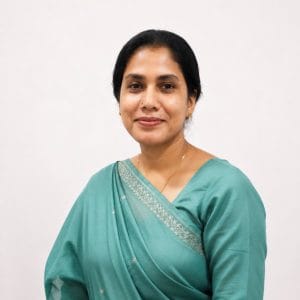
- Teresa Diana Gomes, Counselling Psychologist
- Clinically reviewed by
- Mst. Swampa, Senior Clinical Psychologist, BCPS member
- Last updated
- October 23, 2026
Every Chum article is written for people in Bangladesh by a Chum psychologist or our editorial team, and reviewed by a senior clinical psychologist. How we review · Report an error
Where to go from here
Three next steps, from lightest to most support.

Keep Reading


Psychologists who help with family issues
Book a confidential session with a licensed psychologist at Chum Wellness.