Marriage Counselling in Dhaka: When to Go and What to Expect
Marriage is one of the most significant relationships in a person’s life – and one of the most demanding. In Bangladesh, where marriage carries deep social, family, and religious significance, the pressure on couples can be immense. When a marriage becomes painful, the stakes of getting support right are high.
Marriage counselling in Dhaka offers couples a confidential, structured space to work through difficulties – whether that is communication that has broken down, trust that has been damaged, or simply the slow drift that happens when two people stop truly connecting.
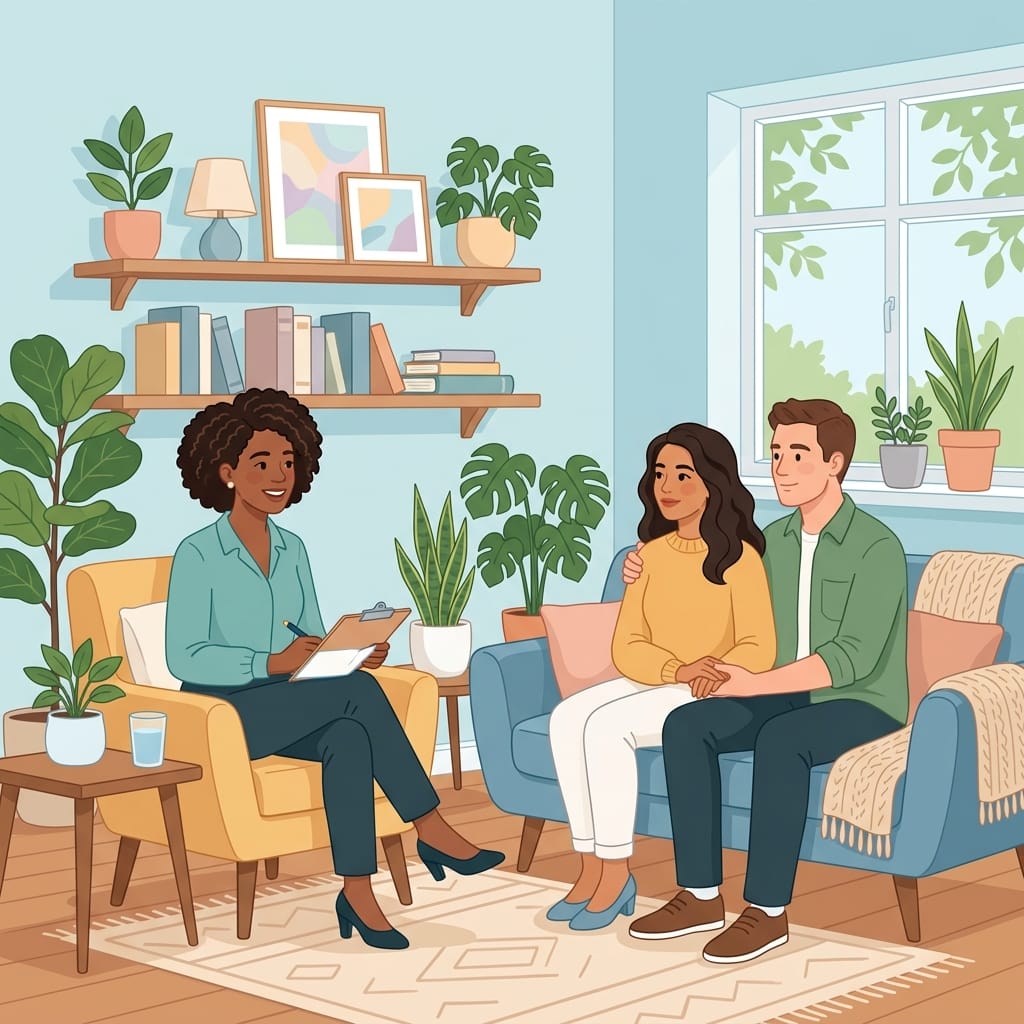
What Is Marriage Counselling?
Marriage counselling (also called couples therapy or relationship therapy) is a form of psychotherapy for married or partnered couples. It is conducted by a trained therapist who works with both partners together – and sometimes individually – to address the problems in the relationship.
The therapist’s role is neutral: not to judge, not to take sides, and not to tell you whether to stay together or separate. Their role is to help you both communicate more clearly, understand each other more fully, and make informed decisions about the relationship.
When Should a Couple Seek Marriage Counselling?
| Seek Counselling If… | Normal Relationship Challenge |
|---|---|
| Same arguments repeat with no resolution | Occasional disagreements about chores or plans |
| One or both partners feel emotionally unsafe | Feeling frustrated after a tough week |
| Intimacy (physical or emotional) has stopped | A temporary dip during stress or illness |
| Trust is broken (affair, lies, secrets) | Feeling insecure but able to talk about it |
| Communication has completely broken down | Struggling to find the right words sometimes |
| You are considering separation | Brief thoughts of “what if” during a fight |
| One partner is dealing with a mental health issue | Mood changes during difficult life events |
Many couples wait years – sometimes until the relationship is near collapse – before seeking help. Research on couples therapy consistently shows that earlier intervention produces better outcomes. Common signs that counselling could help:
- The same arguments happen repeatedly with no resolution
- Communication has become hostile, cold, or has largely stopped
- There is emotional or physical distance that one or both partners find painful
- Infidelity or a significant breach of trust has occurred
- One partner is seriously considering ending the marriage
- Parenting disagreements are affecting the whole family
- External pressures – family interference, financial stress, career changes – have created persistent conflict
Counselling does not require a crisis. Many couples use it proactively – as a way to strengthen communication and connection before problems become severe.
What Happens in the First Marriage Counselling Session?
The first session is an assessment. Your counsellor will ask both of you to describe what is happening in the relationship and what you each hope will change. You will be heard separately within the session – both voices matter equally.
The counsellor observes not just what you say but how you say it – the communication patterns, the emotional dynamics, the points of connection and disconnection. This shapes the treatment plan for subsequent sessions.
Most couples feel some combination of relief and vulnerability after their first session. This is entirely normal.
How Marriage Counselling Works: The Process
Understanding the Cycle
Most relationship problems follow predictable patterns. A therapist trained in Emotionally Focused Therapy (EFT) or systemic approaches will help you identify the cycle – the specific sequence of trigger, reaction, and escalation that keeps repeating. Once you can see the cycle, you can begin to interrupt it.
Building Communication Skills
Many couples have never been taught how to have difficult conversations without escalation. Marriage counselling builds practical skills: how to express a need without it sounding like an attack, how to respond to criticism without becoming defensive, how to repair after conflict.
Rebuilding Trust
Where trust has been broken – by infidelity, dishonesty, or repeated let-downs – the counsellor guides a structured process of disclosure, accountability, and gradual repair. This takes time and cannot be rushed, but is achievable in many cases with commitment from both partners.
Decision-Making
Not every marriage that enters counselling stays together – and not every one that stays together should. A good counsellor supports both partners in making clear, considered decisions about the relationship, whatever those turn out to be. Sometimes the most helpful outcome is an honest, supported separation rather than an unhappy continuation.
How Many Sessions Does Marriage Counselling Take?
For most couples presenting moderate relationship difficulties, meaningful change is typically seen within 8-12 sessions. Recovery from serious breaches of trust (such as infidelity) may require 20 or more sessions. Complex, long-standing patterns take longer.
Your counsellor will review progress with you and adjust the plan. You are never locked into a fixed number of sessions.
Marriage Counselling in Bangladesh: Cultural Context
Bangladesh presents unique cultural factors that affect how couples experience and seek help for relationship problems:
- Family pressure – in-laws, parents, and extended family often have significant influence over marital decisions. A culturally competent therapist works within this reality, not against it.
- Stigma – seeking external help for marital problems can feel shameful, particularly for older generations. Good therapists understand this and create a genuinely non-judgmental space.
- Arranged vs love marriages – both present their own dynamics. Therapists working in Dhaka are familiar with the full spectrum of how marriages form and function in Bangladesh.
- Gender dynamics – power imbalances, different expectations about roles within marriage, and communication styles shaped by gender socialisation are all legitimate areas to explore in counselling.
Online vs In-Person Marriage Counselling in Dhaka
Both are effective. In-person sessions offer a neutral space outside the home. Online sessions via video call are equally effective for most couples and offer flexibility for busy schedules, couples with one partner abroad, or those outside Dhaka.
For couples where one partner is an NRB (Non-Resident Bangladeshi), online marriage counselling is often the most practical option and works very well.
Frequently Asked Questions
- Does marriage counselling work?
Research consistently supports the effectiveness of couples therapy. Emotionally Focused Therapy (EFT), one of the most widely used approaches, shows improvement in approximately 70-75% of couples who complete a full course of treatment. Earlier intervention and commitment from both partners are the strongest predictors of success.
- What if my spouse refuses to come to counselling?
Individual therapy can still be useful – working on your own communication patterns and responses can shift the dynamic in the relationship even without your partner attending. Some couples start with one partner in individual therapy and transition to couples work once both are ready.
- Will the counsellor take sides?
No. A professional marriage counsellor maintains strict neutrality. If either partner feels the counsellor is biased, this should be raised directly – and if it is not resolved, seeking a different counsellor is entirely appropriate.
- Is marriage counselling confidential?
Yes. Everything discussed in sessions is confidential and will not be shared with family members, religious figures, or anyone outside the therapeutic relationship.
- Can marriage counselling lead to divorce?
Counselling does not cause separation – it helps couples make clearer decisions. Some couples who enter counselling choose to separate after working through their situation with clarity. Others find renewed strength in the relationship. The outcome depends on the specific situation and both partners’ choices.
Book Marriage Counselling in Dhaka
Chum Wellness offers couple counselling in Dhaka and marriage counselling with trained, culturally sensitive therapists. Sessions in person and online. Book a session today.
This article is for informational purposes only and does not constitute medical or psychological advice. If you are experiencing a mental health crisis, please contact a qualified professional immediately.
Get the support you need from our licensed professionals today. Both online and in-person sessions are available.
Want to Learn More?
Building a strong understanding of mental health concepts is a vital step toward long-term wellness. For more globally recognized insights and extensive research, we recommend exploring the World Health Organization (WHO) Mental Health resources.
📊 Key Takeaways: Couples Therapy
- Communication: Therapy helps couples break negative communication cycles and rebuild emotional connection.
- Conflict Resolution: Learn healthy ways to resolve disagreements without resorting to destructive patterns.
- Neutral Ground: A therapist provides a safe, unbiased space where both partners feel heard and validated.
Looking for marriage counselling? Start with Chum Wellness’s main couple counselling in Dhaka page to review session options and book confidential support.
Keep Reading
Talk to our psychologists
Book a confidential session with a licensed psychologist at Chum Wellness.