
Child Therapy Dhaka: Signs Your Child Needs Help and How to Get It

Children and teenagers in Bangladesh face a growing range of mental health challenges – from academic pressure and school anxiety to family conflict, behavioural difficulties, and the complex emotional landscape of adolescence. Yet child and adolescent mental health remains one of the most underserved areas in Bangladesh.
জেদি বা একগুঁয়ে সন্তানকে সামলাতে হিমশিম খাচ্ছেন? পড়ে দেখুন জেদি সন্তান সামলানোর উপায়।
This guide explains what child therapy in Dhaka involves, what signs suggest a child might benefit from support, and how to access qualified help for your child.
When Does a Child Need Therapy?
Children often cannot articulate what is wrong. Emotional distress in children frequently appears as behaviour changes, physical complaints, or academic problems rather than direct expressions of feeling. Signs that a child or teenager may benefit from professional support:
Younger Children (5-12 years)
- Significant change in behaviour – becoming withdrawn, aggressive, or clinging
- Persistent sleep problems, nightmares, or bedwetting after a dry period
- Unexplained physical complaints – stomach aches, headaches – without medical cause
- Refusal to attend school or extreme distress about school
- Regression to earlier behaviours (baby talk, thumb-sucking) after a stressful event
- Persistent, intense fears that interfere with daily life
- Difficulty making or keeping friends
Adolescents (13-18 years)
- Persistent low mood, hopelessness, or loss of interest in previously enjoyed activities
- Significant drop in academic performance
- Increased irritability, anger, or conflict with family
- Social withdrawal – pulling away from friends and family
- Changes in eating or sleeping patterns
- Risk-taking behaviour
- Expressions of hopelessness or statements about not wanting to be alive
Any mention of not wanting to live or thoughts of self-harm should be taken seriously and assessed immediately by a professional.
Common Issues Addressed in Child and Teen Therapy
School Refusal and Academic Anxiety
Exam pressure is one of the defining stressors of Bangladeshi childhood. For many students, the anxiety around academic performance becomes debilitating. Child therapy addresses the anxiety directly – building coping skills and working with both the child and parents to reduce pressure to a manageable level.
Behavioural Difficulties
Persistent aggression, defiance, or impulsivity can be symptoms of underlying emotional distress – not simply “bad behaviour.” A child psychologist assesses what is driving the behaviour and works with both the child and family to address it.
Anxiety Disorders in Children
Separation anxiety, social anxiety, specific phobias, and generalised worry are common in Bangladeshi children and adolescents. Evidence-based CBT approaches are highly effective for childhood anxiety.
Depression in Teenagers
Adolescent depression is significantly underdiagnosed in Bangladesh. It often presents differently than adult depression – as irritability and anger rather than sadness, and as social withdrawal rather than explicit expressions of hopelessness.
Family and Parenting Issues
A child’s difficulties rarely exist in isolation – they are almost always connected to family dynamics. Child therapy at Chum Wellness takes a systemic approach, working with parents as well as the child to address the broader context.
Trauma and Difficult Life Events
Bereavement, parental separation, domestic conflict, accidents, or bullying can all have significant psychological impacts on children. ptsd-trauma-signs-treatment-bangladesh/” style=”color:#14306e; font-weight:bold; text-decoration:underline;” class=”chum-auto-link”>Trauma-informed child therapy provides a safe, structured space to process these experiences.
How Child Therapy Works
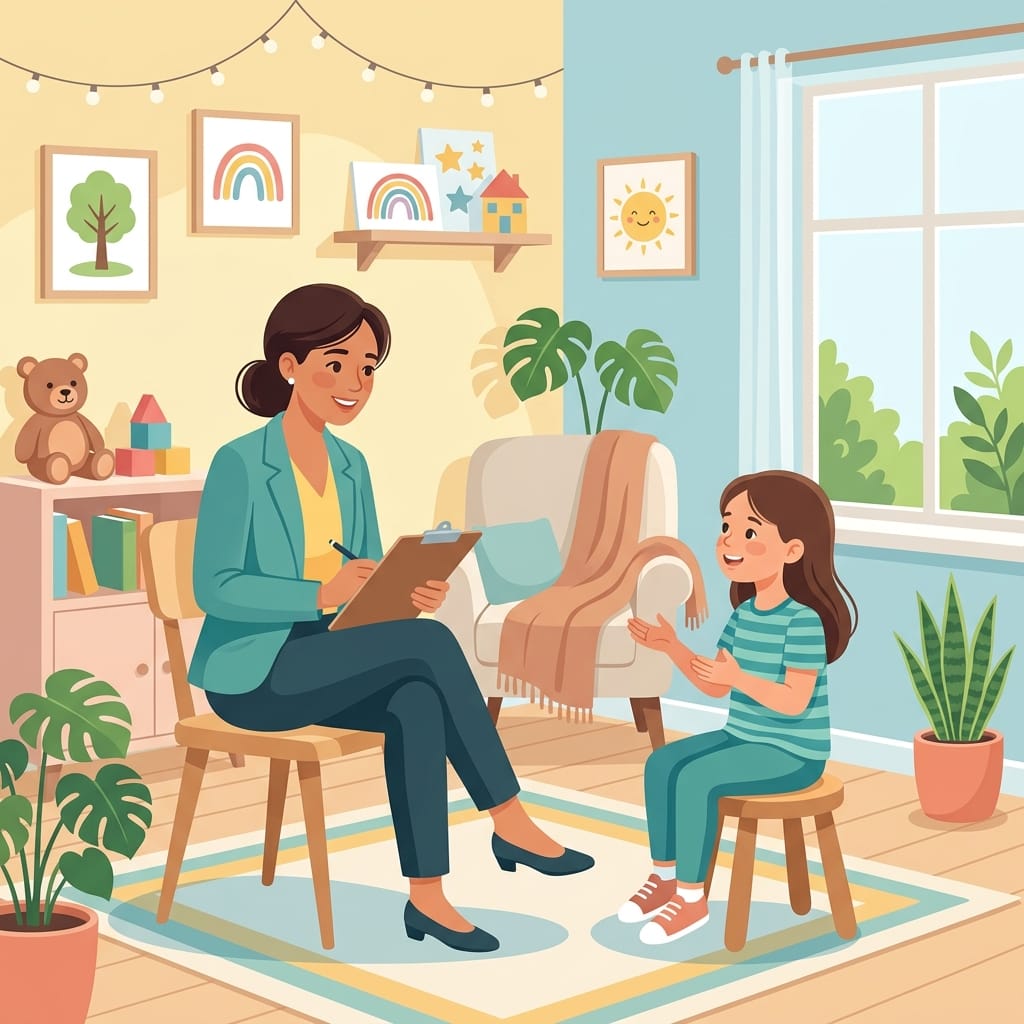
Child therapy adapts to the age and developmental stage of the child. For younger children, therapy often incorporates play, drawing, and storytelling – because these are the natural languages of childhood. For older children and teenagers, more talk-based approaches (including CBT) are used.
Parent involvement is important, particularly for younger children. Parents are often seen separately to discuss the child’s progress and to learn strategies that support the therapeutic work at home.
Online Child Therapy in Bangladesh
Online therapy works well for children approximately 10 years and older who are comfortable with technology. For younger children, in-person sessions are generally preferable. For teenagers, online therapy is often welcomed – they are typically very comfortable with video technology and may find it less intimidating than attending a clinic.
Frequently Asked Questions
- How do I explain to my child why they are seeing a therapist?
Keep it simple and honest. “We are going to talk to someone who helps children with their feelings and worries. It’s like going to a doctor, but for feelings.” Avoid stigmatising language. Most children adapt well once they are in the room with a warm, skilled therapist.
- Will the therapist share everything my child says with me?
The therapist will share general progress and any safety concerns with parents. For teenagers especially, some degree of confidentiality within sessions helps the young person engage honestly. The therapist will discuss this approach with you at the outset.
- At what age can a child benefit from therapy?
Play therapy can be effective from around age 3-4. Talk-based therapy becomes more useful from about age 7-8. The approach adapts significantly to developmental stage.
Child and Teen Therapy in Dhaka
Chum Wellness offers child and adolescent therapy at our child psychologist Dhaka service. Our therapists are experienced working with children and teenagers – and with their families. Book a session today.
This article is for informational purposes only and does not constitute medical or psychological advice. If you are in crisis, please contact a qualified professional immediately.
Get the support you need from our licensed professionals today. Both online and in-person sessions are available.
Want to Learn More?
Understanding the clinical and emotional dimensions of depression is crucial for recovery. For globally recognized research and extensive reading on mood disorders, explore the comprehensive resources provided by the National Institute of Mental Health (NIMH) on Depression.
📊 Key Takeaways: Child Therapy
- Early Intervention is Key: 50% of mental health conditions begin before age 14. Addressing them early leads to better long-term outcomes.
- Behavior is Communication: Sudden changes in sleep, appetite, or mood are often a child’s way of asking for help.
- Play is Therapy: For younger children, play therapy provides a safe environment to express complex emotions they cannot yet verbalize.
- Parental Involvement: Effective child therapy always involves the parents to create a supportive home environment.
For professional support, child counselling in Dhaka, or book a session.
Keep Reading
Talk to our psychologists
Book a confidential session with a licensed psychologist at Chum Wellness.
- Hazera Khatun — Senior Clinical Psychologist
- Mostak Ahamed Imran — Psychologist & Trainer
- Mst. Swampa — Senior Clinical Psychologist